Sentenza milanese sul marchio c.d. di posizione

il portale giurisprudenzadelleimprese.it dà notizia di una interessante sentenza 2020 sul marchio di posizione, definente la lite in primo grado  tra due note imprese dell’abbigliamento (sent. 29.12.2020 sez. spec. impresa, n° 8845/2020, Rg 15722/2018, Diesel c. Calvin Klein).

Il segno de quo è costituito da una striscia posta sulla quinta tasca anteriore destra di un jeans (quella piccolina, porta-monete in origine): Diesel l’ha collocata in obliquo, mentre CK in orizzontale (cioè parallela alla c.d. cintura del jeans, ove sono attaccati i passanti).

Per il collegio il marchio di posizionamento è valido, perchè astrattamente distintivo e perchè non infrange esigenze collettive di disponibilità del segno : <<Trattasi dunque di marchio di posizionamento, posto che nella sua descrizione particolare evidenza risulta essere conferita sia alla specifica apposzione di esso sulla quinta tasca anteriore di un paio di jeans – indipendentemente dalla configurazione di tale indumento – sia nella particolare posizione della striscia di tessuto rilevabile nell’immagine che appare inclinata rispetto al borso superiore della tascasulla quale è apposta .     Ritiene il Collegio che un siffatto segno possa essere oggetto di un uso e di una registrazione come marchio, posto che tale etichetta costituisce un aspetto “capriccioso” ed inessenziale, essendo tutelata non la striscia che compone un’etichetta tout court, bensì una sua specifica configurazione indicata sostanzialmente nella posizione sull’indumento e nella sua inclinazione.    Tale tipologia di etichetta per il suo posizionamento può dunque integrare in sé un segno valido poiché non costituito esclusivamente dalla forma che dà un valore sostanziale al prodotto (art. 9, comma 1,lett. c) c.p.i.) in quanto esso non investe in alcun modo l’aspetto esteriore del prodotto né ne condizionala forma sotto il profilo ornamentale. D’altra parte è pacifico che tale striscia di tessuto è stata sempreutilizzata nell’ambito del marchio più complesso comprendente la denominazione Diesel .  In tale contesto dunque il segno rivendicato non può costituire il motivo per cui il consumatore decidedi acquistare quel tipo di pantalone jeans. Esso dunque rispetta in sé il principio di estraneità delmarchio al prodotto, la cui violazione renderebbe invece insuscettibili di tutela come marchio i disegniornamentali del prodotto quando abbiano carattere meramente estetico – tutelabili quindi come modelli- ossia quando attribuiscano allo stesso solo un “valore sostanziale”, divenendo elemento influente sullascelta d’acquisto (cfr. caso Burberry Check, Cass., n. 5243/1999, cfr. CG C-299/99, “Philips”; CG C-205/13, “Stokke”, cfr. Trib. UE, T-508/08, “Bang & Olufsen”)>>.

Inoltre, il segno non solo è in astratto ammissibile alla privativa, ma anche in concreto distintivo di una certa azienda (di Diesel), § 2.1-2.2 (distinzione concettuale fondata sul dettato normativo ma di dubbia esattezza).

Nè ricorre la funzione ornametnale e nemmeno la standardizzazione, § 2.3.

La tutela perà non viene concessa poichè il segno avversario orizzontale è sufficientemente diverso da scongiurare il rischio di confondibilità, p. 15.

Interessante infine è l’affermazione per cui conta il segno come chiesto in registrazione e non come viene percepito a seguito dell’uso , che eliminerebbe o ridurrebbe la caratteristica della obliquità/inclinazione nella percezione del pubblico: <<Né vale opporre a tale considerazione – come hanno sostenuto le attrici – il fatto che nell’uso quotidiano in realtà la caratteristica dell’inclinazione dell’etichetta andrebbe persa per effettto dei vari movimenti di chi indossa il pantalone. Tale rilievo – che in sé pare contraddire le stesse tesi delle attrici quanto alla validità del loro segno rispetto a segni anteriori – non può essere considerato nella valutazione di interferenza, dovendosi procedere ad un confronto tra i segni così come apposti sui prodotti e come registrati rispetto a quelli in contestazione. Diversamente l’ambito di tutela del segno in questione risulterebbe indebitamente allargato fino a coprire di fatto quei segni che la stessa titolare del marchio considera non interferenti>>

La corte milanese richiama il precedente europeo Corte Giustizia 18 aprile 2013, C-12/12, Colloseum Holding AG/Levi Strauss & Co.

La sentenza pare sostanzialmente esatta. Solo che non precisa la base normativa della tutela da  marchio di fatto (azionato assieme alla registrazione): la quale consiste nell’art. 2598 cc. (disposizione mai invocata in motivazione) e non nella disciplina posta dal cod. propr. ind.
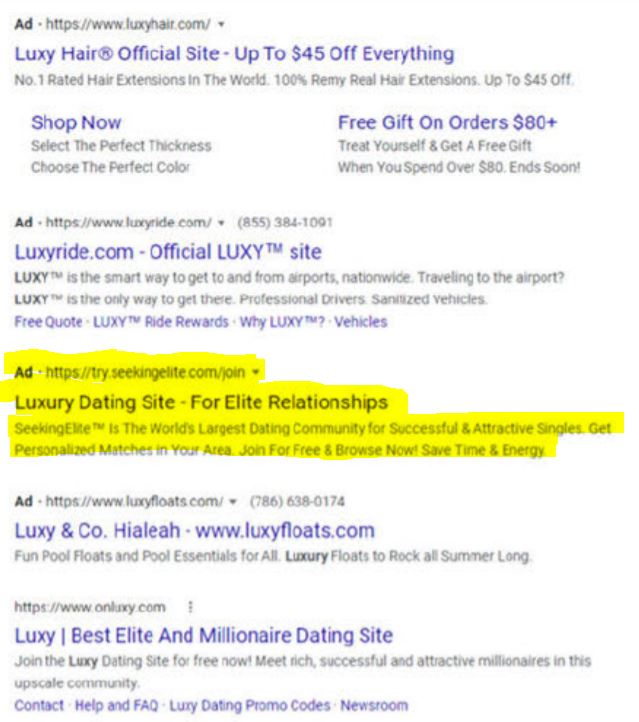
“Luxy” non è confondibile con “Luxury”: quasi un caso di keyword advertising

Il tribunale del Central District of California, 3 ottobre 2021, Case 2:20-cv-00423-RGK-KS, Reflex media c. Luxy decide una domanda di violazione di marchio e concorrenza sleale.

Il marchio azionato era <Luxy> scritto con una certa paricolarità grafica.

Il resistente aveva fatto un’inserzione in Google Search: digitando <luxy> compariva -tra quattro- il suo annuncio a pagamento con titolo <Luxury dating site. For elite relatgionship> (v. riproduzione sotto).

La corte nega che tale titolo violi il diritto sul marchio predetto: <<Plaintiffs’ advertisement does not contain the word “Luxy” or appear to cause any more confusion than the other three advertisements. Even so, Defendant alleges that the title of Plaintiffs’ advertisement — “Luxury Dating Site – For Elite Relationships”—causes confusion because SeekingElite.com and OnLuxy.com offer the same services and because the word “Luxury” is similar to Defendant’s trademark. However, the word “Luxury” and Defendant’s trademark are not alike….the dissimilarity between the marks suggests that Plaintiffs did not intend to deceive the public by incorporating the word “Luxury” into the title of their advertisement.>>

La corte poi nega la genericità di termini  <seeking> <seeking millionaire> etc. per siti di incontri.

(notizia e link alla sentenza , come pure l’immagine di cui sotto, tratti dal blog di Eric Goldman)

https://blog.ericgoldman.org/wp-content/uploads/2021/12/luxy.jpg

Registrazione come marchio di segni di particolare interesse pubblico (art. 7.1.i, reg. 207/2009)

Un’astuto soggetto austriaco chiede la registrazione come marchio per olio di semi di un segno figurativo/denominativo  contenente (in posizione preminente ) il segno IGP (in tedesco ….)= dell’Unione Europea, posto dal reg. 1152/2021 sul regime di qualità dei prodotto alimetnaire, ivi § 6 (però in GUCE L343 del 14.12.2012 il segno non c’è, salvo errore).

Vi aggiugne l’espressine <<Olio di semi di zucca, conforme all’indicazione geografica protetta “olio di semi di zucca della Stiria”>> (in tedesco).

La domanda è respinta per inottemperanza all’art. 7.1.i del reg. 207-2009: <<i marchi che comprendono distintivi, emblemi o stemmi diversi da quelli previsti dall’articolo 6 ter della convenzione di Parigi e che presentano un interesse pubblico particolare, a meno che le autorità competenti ne abbiano autorizzato la registrazione;>>.

Decide Trib. UE , 01.12.2021, T-700/20, Schmid c. EUIPO , annullando la decisione amminsitrativa di rigetto , perchè non ha considerato nel suo esame  <<se il pubblico rischi di credere, a causa della presenza nel marchio contestato della riproduzione del simbolo IGP, che i prodotti designati da tale marchio beneficino dell’approvazione o della garanzia dell’autorità alla quale tale emblema rinvia, vale a dire l’Unione, oppure che siano collegati in altro modo con quest’ultima. I>>, § 34.

Tale condizione per vero non è prescritta in modo esplicito, ma viene desunta dalla precedente lettera h) del medesimo art. 7.1: il quale rinvia all’art. 6 ter della Conv. Unione di Parigi (e qui al § 1.c), ove invece figura.

Solo che mentre la lett. h contiene un rinvio espresso, la lettera i) tace. Per cui, se si dà importanza al brocardo ubi lex voluit dixit , ubi noluit tacuit, la soluzione appare faticosa.

Altra decsione UE sul deposito di marchio in malafede (caso “Agate”)

Trib. UE 29.09.2021, T-592/20, Universe Agro c. EUIPO, decide una lite su deposito di marchio in malafedee ex art. 59.1.b reg. 2017/1001.

Il marchio denominativo <Agate> era stato chiesto in registrazione in sede europea e concesso per pneumatici

Ma ci fu opposizione da titolare cinese di marchio complesso confondibile che da tempo vendeva in Romania: egli provò di essere stato solo anticipato su un segno che lui usava da tempo ma che non aveva ancora registrato.

Il marchio viene annullato per riscontro di malafede al momento del deposito. Segue conferma in sede di reclamo amministrativo.

Ora anche il primo grado giudiziale conferma le decisioni ammnisitrative.

La sentenza non offre spunti interssanti sotto il profilo giuridico astratto, ma solo sotto quello fattual probatorio. Possono invece essere di qualche interesse infatti le insidiose eccezioni dedotte dal depositante bulgaro per negare la propria malafede.,

Marchio rinomato cede a marchio anteriore non rinomato

il Trib UE decide l’opposiizone alla registazione di mrachio da prate del Ac Milan: Trib. Ue 10.11.2021, T-353/20, aC Milan spa c. EUIPO. L’oppositore è titolare di marchio denominativo <Milan> del 1984, § 53, mentre il deposito di marchio figurativo (§ 2) dell’AC Milano è del 2o17.

I prodotti o servizi sono quasi identici (penne, carte, quaderni e materiali di cancelleria) , per cui la lite si giuoca sulla somiglianza tra marchi.

Centrale è , comprensibilmente, il giudizio sulla preminenza o meno del segno figurativo nei due marchi. Contraraumetne a quanto di solito si ritiene, qui non lo è per il marhcio anteriore, date laa sua ridotta evidenza, § 57 ss.

Analoga preminenza anche per il segno del depositante AC Milan, § 84 ss.

Pertanto la somiglianza tra segni è quasi scontata.

La soc. del team calcistico perde dunque sia la fase amminsitrativa sia il primo grado giudiziale.

Ricordo solo due aspetti:

  1. le iniziali considerazioni generali, slegate dal (ma poi applicate al) caso de quo:

    << In interpreting the concept of genuine use, account must be taken of the fact that the ratio legis for the requirement that the earlier mark must have been put to genuine use is not intended to assess the commercial success or control the economic strategy of an undertaking or to restrict the protection of marks only to their quantitatively significant commercial exploitation (judgments of 8 July 2004, T‑203/02, Sunrider v OHIM – Espadafor Caba(VITAFRUIT), T‑203/02, EU:T:2004:225, paragraph 38, and of 2 February 2016, Benelli Q. J. v OHMI – Demharter (MOTOBI B PESARO), T‑171/13, EU:T:2016:54, paragraph 68). A trade mark is put to genuine use when it is used, in accordance with its essential function of guaranteeing the identity of origin of the goods or services for which it is registered, in order to create or maintain an outlet for those goods or services, to the exclusion of uses of a symbolic nature the sole purpose of which is to maintain the rights conferred by the trade mark (see judgment of 8 June 2017, W. F. Gözze Frottierweberei and Gözze, C‑689/15, EU:C:2017:434, paragraph 37 and the case-law cited).

    24      In order to examine, in a particular case, the genuineness of the use of an earlier mark, an overall assessment must be made, taking into account all the relevant factors of the case. That assessment implies a certain interdependence between the factors taken into account. Therefore, a low volume of goods marketed under that mark may be offset by a high intensity or consistency of use of that mark over time, and vice versa. Furthermore, the turnover achieved and the quantity of sales of goods under the earlier mark cannot be assessed in absolute terms, but must be assessed in relation to other relevant factors, such as the volume of commercial activity, the production or marketing capacities or the degree of diversification of the undertaking exploiting the mark and the characteristics of the goods or services on the market concerned (see judgment of 8 July 2004, VITAFRUIT, T‑203/02, EU:T:2004:225, paragraph 42 and the case-law cited).

    25      Moreover, genuine use of a trade mark cannot be demonstrated by probabilities or presumptions, but must be based on concrete and objective elements which prove actual and sufficient use of the trade mark on the relevant market (see judgments of 16 June 2015, Polytetra v OHIM – EI du Pont de Nemours (POLYTETRAFLON), T‑660/11, EU:T:2015:387, paragraph 47 and the case-law cited, and of 9 September 2015, Inditex v OHIM – Ansell (ZARA), T‑584/14, not published, EU:T:2015:604, paragraph 19 and the case-law cited).

    26      Genuine use of the trade mark presupposes that it is used publicly and externally, and not only within the undertaking concerned (see, to that effect, judgment of 11 March 2003, Ansul, C‑40/01, EU:C:2003:145, paragraph 37). However, external use of a trade mark is not necessarily equivalent to use directed towards final consumers. Actual use of the mark relates to the market in which the proprietor of the mark carries on business and in which he or she hopes to exploit his or her mark. Thus, to consider that the external use of a trade mark, within the meaning of the case-law, necessarily consists of use directed towards final consumers would be tantamount to excluding trade marks used solely in business-to-business relationships from the protection of Regulation No 207/2009. The relevant public to which trade marks are intended to be directed does not include only final consumers, but also specialists, industrial customers and other professional users (see judgment of 7 July 2016, Fruit of the Loom v EUIPO – Takko (FRUIT), T‑431/15, not published, EU:T:2016:395, paragraph 49 and the case-law cited)>>.

  2. i fatti dedotti dallopponente per provare il suo <uso effettivo>, § 29:

    –     an undated affidavit from its Managing Director certifying annual turnover figures for the period 2010 to 2016;

    –        advertising material in German (numerous copies of catalogues and leaflets) dating from 2009 to 2014 for goods bearing the earlier mark;

    –        a copy of 43 invoices issued in the period between 2008 and 2014, addressed to various customers in Germany;

    –        documents concerning turnover and sales figures, dating from the years 2008 to 2016;

    –        price lists from 2008 to 2014 showing the suppliers of the products of the other party to the proceedings before the Board of Appeal.

Non si discute della validità del marchio anteriore, che potrebbe a sua volta essere stato anticipato dall’uso di fatto (non dalla registrazione, suppontgo, interventua appunto nel 2017) del segno da aprte del team calcistico.

Probabilmente difettava l’affinità merceologica, essendo assai discutibile che possa essere superata dalla rinomanza qualora non vi sia registrazione ma appunto solo uso di fatto.

Il Trib. UE sui marchi di forma (i rossetti per labbra Guerlain)

Nella lite tra l’Ufficio e Guerlain per la registrazione come marchio di forma costituto da  stick portanti rossetto per labbra (e non costituiti direttamente dal rossetto),  il Tribunale ribalta le decisioni negative del’luifficio e mne aferma la validità.

Si trata di Trib. UE 14.07.2021, T-488/20, che decide in base al reg. 1001 del 2017

qualche indicazione realistica sulla loro forma  nei disegni e immagini in sentenza (§§ 2 e 7; solo in francese).

Nella scheda di sintesi in italiano leggiamo che:

<< In primo luogo, il Tribunale ricorda che la valutazione del carattere distintivo non si basa sull’originalità o sul mancato uso del marchio richiesto nel settore cui appartengono i prodotti e i servizi interessati Infatti un marchio tridimensionale costituito dalla forma del prodotto deve necessariamente discostarsi significativamente dalla norma o dagli usi del settore interessato. Pertanto la mera novità di tale forma non è sufficiente per concludere che esiste un carattere distintivo. Tuttavia il fatto che un settore sia caratterizzato da una considerevole varietà di forme di prodotti non implica che un’eventuale nuova forma sia necessariamente percepita come una di esse

In secondo luogo, secondo il Tribunale, la circostanza che taluni prodotti presentino un design di qualità non implica necessariamente che un marchio costituito dalla forma tridimensionale di tali prodotti possa distinguere i prodotti medesimi da quelli di altre imprese. Il Tribunale rileva che la presa in considerazione dell’aspetto estetico del marchio richiesto non equivale ad una valutazione sulla bellezza del prodotto di cui trattasi, bensì mira a verificare se tale aspetto sia idoneo a suscitare un effetto visivo oggettivo e inusuale nella percezione del pubblico di riferimento.

In terzo ed ultimo luogo, tenendo conto delle immagini considerate dalla commissione di ricorso come rappresentative della norma e degli usi del settore interessato, il Tribunale constata che la forma in questione è inusuale per un rossetto e differisce da qualsiasi altra forma presente sul mercato. Infatti il Tribunale osserva innanzitutto che tale forma ricorda quella dello scafo di un battello o di un paniere. Orbene, una forma siffatta differisce significativamente dalle immagini considerate dalla commissione di ricorso, le quali rappresentavano per lo più rossetti di forme cilindriche e parallelepipede. Inoltre la presenza di una piccola forma ovale in rilievo è insolita e contribuisce alla parvenza inconsueta del marchio richiesto. Infine il fatto che il rossetto rappresentato da tale marchio non possa essere posizionato in modo verticale accentua l’aspetto visivo inconsueto della sua forma.

Il Tribunale pertanto ritiene che il pubblico di riferimento rimarrà sorpreso da tale forma facilmente memorizzabile e la percepirà come significativamente diversa dalla norma o dagli usi del settore dei rossetti ed idonea ad indicare l’origine dei prodotti interessati. Il marchio richiesto è quindi dotato di un carattere distintivo che ne consente la registrazione >>.

Precedente di cui tener buona nota nelle (quasi mai semplici) vertenze in tema di marchio tridimensinale

Marchio “Borro” (o “il Borro”) per vini: valido, invalido o valido ma debole?

Altra lite sul marchio <Borro> per vini: la SC conferma che è segno debole e rigetta il ricorso .

Così Cass. 26.872 del 04.10.2021, rel. Terrusi, Il Borro Agricola srl c. Il Sapito srl +1.

La corte di appello fiorentina aveva confermato la decisione del tribunale della stessa città <che aveva ravvisato il carattere debole del marchio “Il Borro”, registrato dall’attrice Il Borro soc. Agricola s.r.l., in quanto corrispondente a un sostantivo comune e a toponimo diffuso in ambiente toscano, peraltro dotato di una certa capacità distintiva, ed escluso l’illiceità della condotta di contraffazione e concorrenza sleale ascritta alla convenuta Omnibus s.r.l. (incorporante la Animar Tognetti s.r.l.) e alle chiamate in causa R.S. (titolare della ditta Podere La Casetta) e Il Sapito s.r.l. in conseguenza della commercializzazione di vini da parte loro con marchio in parte riproducente il termine “borro”;

la corte d’appello ha ritenuto il marchio debole perché non svincolato dai caratteri dell’azienda e del prodotto, né assurto a chiara fama, essendo corrispondente a un termine che, nell’idioma toscano, indica una particolare conformazione orografica del terreno, non di rado associata al posizionamento di vigne, che si rinviene in molte indicazioni toponomastiche di poderi, tenute e borghi sì da esser divenuta di uso comune nell’ambiente;

ha dunque osservato che legittimamente il termine poteva essere utilizzato da altri imprenditori vinicoli con varianti idonee, come nella specie, a evitare confusione, mediante adozione di accorgimenti distintivi collaterali di tipo estetico/grafico e con indicazione della specifica casa produttrice, che non potevano sfuggire all’attenzione del consumatore del prodotto vinicolo di qualità;>>

La SC è della stessa idea: <nella specie la sentenza impugnata ha infine comunque specificato in qual senso il marchio “il Borro” dovesse esser intendersi come marchio debole, essendo incentrato per l’appunto su un termine (“borro”) indicativo di un elemento morfologico e naturalistico del terreno; e questa Corte, in separate controversie tutte riferibili alla tutela del citato marchio, ne ha confermato la conclusione in base al fatto che l’uso di un vocabolo indicativo di una determinata conformazione del territorio, sovente tipica proprio dei luoghi di produzione del vino, è a tal punto di uso comune da appartenere, in pratica, al linguaggio quotidiano (Cass. n. 4254-19, Cass. n. 10980-21);>, sub III (si notino le altre pronuncie della SC sul medesiumo marchio).

La Sc però rettifica la decisione diappello negando che si tratti di marchio geografico: <va detto, a parziale correzione di quanto sostenuto nella sentenza d’appello, che non è propriamente un marchio geografico quello che indica una semplice caratteristica morfologica di un elemento naturale, come la conformazione del terreno, trattandosi in tal caso di una mera indicazione di comune linguaggio>, sub II.

<Borro> nel Grande Dizionario dell’Uso di T. De Mauro, è così spiegato:

“borro /’borro/ (bor•ro) s.m. (RE) sett., tosc.
1 stretto avvallamento, canale in declivio scavato dall’erosione delle acque | fosso che raccoglie le acque di scolo dei campi | canale di scarico delle paludi
2 (LE) burrone”.

Marchio di forma costituito dalla forma del calzare (sul sandalo Crocs)

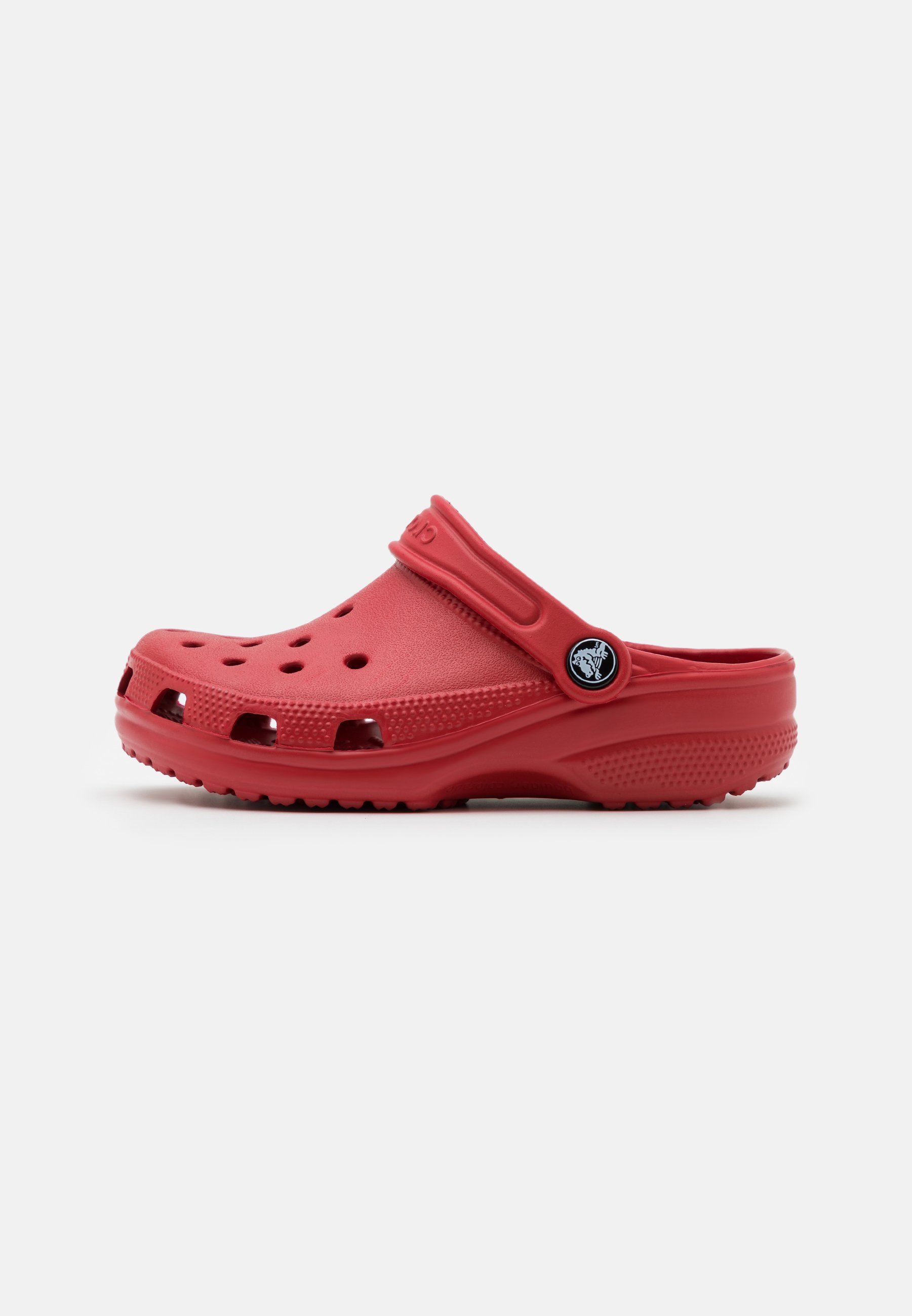
Si pronuncia la corte di appello svedese IP sulla registrabilità del marchio di forma costituito dalla forma dei sandali Crocs:

Crocs - CLASSIC UNISEX - Sandali da bagno - red

(immagine presa da internet, in zalando.it)

Il sempre difficile tema dei marchi di forma è esaminato dal Patent and Market Court of Appeal (Patent- och marknadso ̈verdomstolen), decision of 2 December 2020 – PMT 7014-19: ne dà notizia GRUR International, in corso di pubblicazione , offrendo traduzione inglese e breve nota di B. Marusic.

Qui segnalo che:

1) le caratteristiche essenziali trovate in primo grado sono cinque: <<The parties in the case are of the opinion that the essential features of the mark are the heel strap, the flat rivets, the wide and round toe part, and that there are holes onthe top and on both sides.>>.

2) la corte di appello le riduce a due, anzi tre: <<According to the Patent and Market Court of Appeal, the essential features of the trade mark thus consist partly of the heel strap and partly of the holes on the top and on the sides>> (stringa di chiusura e fori superiori/laterali)

3) circa i fori, l’aspetto pià interessante, essi non sono dettati dalla esigenza funzionale di favorire la ventilazione e lo scorrimento dell’acqua, osserva la Corte: infatti avrebbero potuto essere collocati o disegnati diversamente o altrove,  senza pregiudicare la esigenza funzionale: <<The assessment of whether the mark consists only of a shape which results from the nature of the good will thus be made with regard to the holes on the shoe and the heel strap. Like the Patent and Market Court, the Patent and Market Court of Appeal assesses that the heel strap only has a generic function of holding the shoe in place. Regarding the holes on the shoe as an essential feature, in this context they must be understood as holes with the number, size and detailed design as well as the location that appears from the trade mark registration. The evidentiary procedure in the case shows that the holes have the function of increasing ventilation. The holes on the sides have been designed and placed in such a way that water, for example, should be able to flow out easily. The fact that an item of footwear of the current type has good ventilation and enables water to drain out must certainly be assumed to be considered as properties that a consumer demands from competitors’ goods. However, this can be accomplished in several different ways. It is possible to vary the design – for example in terms of the number of holes, their size, shape and location – to achieve the same functions as in the holes in the Crocs shoe. The scope for variations in the design is thus almost infinite. The conclusion of the Patent and Market Court of Appeal is therefore that the trade mark cannot be considered to consist only of a shape that results from the nature of the goods>>.

Questione spinosa: da un lato, il margine d manovra per i concorrenti  è limitato, non avendo altri spazi in cui inserire i fori; dall’altro, anche la diversa realizzabilità dei fori non toglie che il loro inserimento sia dovuto solo a motivi funzinali o comunque abbia di fatto scarsa arbitrarietà e dunque distintività.

Ancora sul deposito di marchio in mala fede

Il Trib. UE 09.06.2021, T-396/20, Aeroporto di Villanova d’Albenga SpA (Riviera-Airport), c. EUIPO-Aéroports de la Côte d’Azur di Nizza, interviene sul tema, che sta diventando sempre pi frequententemente occasione di liti.

Si veda nella sentenza il marchio figurativo chiesto in registrazione.

L’opposizione fu basata sull’art. 52 reg. 207/2009 per cui: <<Su domanda presentata all’Ufficio o su domanda riconvenzionale in un’azione per contraffazione, il marchio UE è dichiarato nullo allorché:a) …;  b) al momento del deposito della domanda di marchio il richiedente ha agito in malafede.>>

La sentenza non contiene particolari elaborazioni teoriche ma interessanti elementi fattuali, importanti per l’operatore.

In generale ricorda che <<31  When interpreting the concept of bad faith, the Court of Justice has found previously that while, in accordance with its usual meaning in everyday language, bad faith presupposed the presence of a dishonest state of mind or intention, that concept had moreover to be understood in the context of trade mark law, which was that of the course of trade. In that regard, it held that Council Regulation (EC) No 40/94 of 20 December 1993 on the Community trade mark (OJ 2014 L 11, p. 1) and Regulations No 207/2009 and 2017/1001, which were adopted subsequently, had the same objective, namely the establishment and functioning of the internal market. The rules on the EU trade mark are aimed, in particular, at contributing to the system of undistorted competition in the European Union, in which each undertaking must, in order to attract and retain customers by the quality of its goods or services, be able to have registered as trade marks signs which enable the consumer, without any possibility of confusion, to distinguish those goods or services from others which have a different origin (see judgment of 12 September 2019, Koton Mağazacilik Tekstil Sanayi ve Ticaret v EUIPO, C‑104/18 P, EU:C:2019:724, paragraph 45 and the case-law cited).

32      The Court of Justice inferred from this that the absolute ground for invalidity referred to in Article 52(1)(b) of Regulation No 207/2009 applied where it was apparent from relevant and consistent indicia that the proprietor of an EU trade mark had filed the application for registration of that mark not with the aim of engaging fairly in competition but with the intention of undermining, in a manner inconsistent with honest practices, the interests of third parties, or with the intention of obtaining, without even targeting a specific third party, an exclusive right for purposes other than those falling within the functions of a trade mark, in particular the essential function of indicating origin recalled in paragraph 31 above (see judgment of 12 September 2019, Koton Mağazacilik Tekstil Sanayi ve Ticaret v EUIPO, C‑104/18 P, EU:C:2019:724, paragraph 46 and the case-law cited).

33      The Court of Justice has also held that the intention of a trade mark applicant is a subjective factor which, however, had to be determined objectively by EUIPO. Consequently, any claim of bad faith must be the subject of an overall assessment, taking into account all the factual circumstances relevant to the particular case. It is only in that manner that a claim of bad faith can be assessed objectively (see judgment of 12 September 2019, Koton Mağazacilik Tekstil Sanayi ve Ticaret v EUIPO, C‑104/18 P, EU:C:2019:724, paragraph 47 and the case-law cited).>>

L?ufficio aveva rigettato l’opposizione di malafede <<on the basis of the documents in the file, that (i) prior to the date on which the contested mark was filed, namely 22 February 2017, there was no airport called Riviera Airport in Italy, (ii) there was no evidence showing that an air transport service or any other commercially relevant service had actually been provided in that airport under the sign Riviera Airport and (iii) the activities carried out between September 2016 and July 2017 showed only the applicant’s preparatory activities with a view to potentially relaunching Albenga Airport under the name Riviera Airport.  In that regard, it should be noted that all the commercial documents, such as invoices or communications with the public, which the applicant submitted are associated either with the names Aeroporto Clemente Panero or Aeroporto di Villanova d’Albenga, or with the abbreviation AVA, and that it added the element ‘riviera airport spa’ to its company name only in July 2017, namely after initiating opposition proceedings. The Board of Appeal was also unable to find that either an article from the online encyclopaedia Wikipedia or email addresses had probative value since the content of the former could have been created or altered by anyone and there was no proof that the latter had been used in the context of a commercial or professional activity. The only document in the file in which the name Riviera Airport appears is an internal document relating to a modernisation plan referring to the airport with the names above; that plan was not communicated externally. On the basis of the evidence produced by the applicant, the Board of Appeal was able to find, correctly, that the applicant had not proved earlier use of the name Riviera Airport and that its mere plan to use that name in the future was not in itself conclusive for a presumption of bad faith>>, §§ 38-39.

Nè è stata ravvisata la mala fede per l’allegata violazione di un rapporto previo fiduciario, che non  è stato accertato: << 43  In that regard, it must be held that the Board of Appeal did examine other factual circumstances. As a second step, the Board of Appeal focused its examination on the applicant’s arguments relating to the alleged fiduciary relationship between the applicant and the intervener.   44      In that context, according to the applicant, the existence of an earlier cooperation agreement between the applicant and a subsidiary of the intervener establishes that there had been a business and fiduciary relationship between the parties, in the context of which the ‘Riviera Airport Project’ design master plan was sent and a meeting was held, and, as a consequence, the intervener should have refrained from applying to register the contested mark.   45      As the Board of Appeal correctly explained in paragraphs 43 to 54 of the contested decision, neither the contact which was made in February 2017 between the applicant and the intervener nor an investment agreement allow it to be concluded that there was a fiduciary relationship which required the intervener to refrain from applying to register the contested mark or, consequently, that the latter acted in bad faith.   46      As regards the contact which was made in February 2017, it must be noted that that contact is based on the letter of 20 February 2017, sent by A (director and new owner of the applicant) to B (CEO of Aéroports de la Côte d’Azur), in which A wrote that the airport Villanova of Albenga had been privatised and that he was the new owner of it. The following day, A also sent two copies of a design master plan for the ‘Riviera Airport’ project and expressed his hope of having a productive meeting on Friday 24 February. It is apparent from a cease-and-desist letter of 19 May 2017 sent by the intervener to the applicant that that meeting took place and that, during that meeting, the applicant sought the intervener’s consent to use the sign Riviera Airport, which the intervener categorically refused to give.  47      As regards the existence of an earlier cooperation agreement concluded between the applicant and a subsidiary of the intervener, it must be held, as the Board of Appeal found, that that agreement is irrelevant in so far as that agreement, which was entered into at the end of 2012 and the term of which ended in 2014, contains nothing capable of affecting the present case or the contested sign. It follows that there was no obligation on the intervener to refrain from applying to register the contested mark>>

Marchi denominativi e ruolo del cognome (di persona famosa): sul giudizio di confondibilità

Trib. UE 16.06.2021, T-368/20, Smiley Miley Inc. c. EUIPO, decide la questione della registrabilità del segno denominativo MILEY CIRUS dopo opposizione che allega la seguente anteriorità grafico/denominativa :

Image not found

Si trata di utile sentenz aper ripassare ifodnametnali del giudizio di confondibilità, compresa il ruolo del segno costituetne nome/cognome, § 29.ss.

La componente visuale e fonetica porta ad un giudizio di somiglianza media, § 45-46.

Quella concettuale, invece , viene esclusa: <<As regards, next, the earlier mark CYRUS, it must be held that, contrary to what EUIPO claims, the fact that the name Cyrus is not a common surname does not necessarily support the inference, in the present case, that the relevant public will perceive that surname alone as the short version of the full name Miley Cyrus, thus identifying the same person. As has been stated in paragraph 37 above, Miley Cyrus markets her activities and performs on stage using her first name and surname taken together. By contrast, it has been neither suggested nor demonstrated that she has been known as a singer or actress by her surname alone. It is thus apparent that the fact that Miley Cyrus is well known, as a singer and actress, results from her first name and surname taken together, and not from her surname alone. Accordingly, the mere fact that that name is not common does not support the inference that the relevant public will perceive the word ‘cyrus’, taken alone, as referring to the famous singer and actress Miley Cyrus, who, according to the evidence before the Court, has specifically never used the name Cyrus in isolation in the course of her career. It must therefore be held that the earlier mark has no particular semantic meaning for the relevant public. 

It thus follows from the foregoing considerations that the applicant is correct in claiming that the marks at issue are conceptually different and that the Board of Appeal erred in finding that the conceptual comparison was neutral.>>, § 58-59.

Le componenti dette sono astrattamente compensabili, § 60, ed è cioè che avviene nel caso sub iudice <<The mark applied for, MILEY CYRUS, has a clear and specific semantic content for the relevant public given that it refers to a public figure of international reputation, known by most well-informed, reasonably observant and circumspect persons, as has been pointed out in paragraph 51 above, whereas the earlier mark has no particular semantic meaning. Furthermore, the reputation of the singer and actress Miley Cyrus is such that it is not plausible to consider that, in the absence of specific evidence to the contrary, the average consumer, confronted with the mark MILEY CYRUS designating the goods and services in question, will disregard the meaning of that sign as referring to the name of the famous singer and actress and perceive it principally as a mark, among other marks, of such goods and services (see, to that effect, judgment of 17 September 2020, EUIPO v Messi Cuccittini, C‑449/18 P and C‑474/18 P, not published, EU:C:2020:722, paragraph 36).    It follows that the conceptual differences existing in the present case between the marks at issue are such as to counteract the visual and phonetic similarities set out in paragraphs 44 to 46 above>, §§ 61-63